
Key changes recently were made in reverse mortgages. You should be aware of the changes and how they affect the way reverse mortgages can help increase your financial independence. Properly used, they are tools for employing home equity to enhance your retirement.
The first change is that the Federal Housing Administration restructured the program again for the loans its guarantees. Since the FHA guarantees most reverse mortgages these days, it sets the rules for most borrowers.
The FHA calls the loans Home Equity Conversion Mortgages (HECM). In September 2013, FHA replaced two types of loans (HECM Standard and HECM Saver) with today's HECM. The basic rules are the same. You have to be at least age 62 and own your principal residence outright or have paid-down a "considerable amount" of the debt. You can borrow only against your principal residence and must have sufficient resources to pay your property taxes, insurance, homeowners' association dues, and similar expenses. You also have to participate in an information session with a HUD-approved counselor before taking the loan.
Under a HECM, you receive money from a lender today, but no payments are due on the loan until you no longer occupy the residence. The principal, interest, and fees on the loan accumulate and eventually are paid from the sale proceeds of the home.
A federally-insured HECM is made by a private lender but is guaranteed by the FHA. Any portion of the loan balance that can't be paid from the home sale proceeds is covered by the government. If the home's value exceeds the debt, your heirs can keep the excess.
You have to pay a range of fees: mortgage insurance, an origination fee, a servicing fee, and the usual third party charges (appraisal, title search, inspections, surveys, recording fees, etc.). The origination fee can be as high as $6,000, depending on the value of your home. You have the choice of payin! g most of the fees upfront or having them added to the loan balance.
A little-known provision of the law requires the lender to offer you or your heirs a choice when the loan is due. They can allow the home to be foreclosed and the sale proceeds used to cover the loan. Or they can extinguish the debt by paying 95% of the home's current value, no matter how much is owed on the loan. If the loan amount is more than 95% of the home's value, the government will make up the loss to the lender. If you take out a HECM, be sure your heirs are aware of the option.
Another change since the financial crisis is most of the big-name lenders have left the HECM market. The number of HECMs issued rose steadily until home prices collapsed in many areas. For that and other reasons the major banks exited the market. Most HECM lenders now are smaller firms and not well-known.
The New York Times recently reported that some HECM lenders don't offer the repayment choice to next of kin and proceed immediately to foreclosure. You want to choose your lender carefully and let your loved ones know what you're doing and what their rights are when the loan is due.
The amount you can borrow depends on the value of your home, your age, and current interest rates. The older you are, the more you can borrow. The lower interest rates are, the more you can borrow.
For example, at recent interest rates, a 62 year old could borrow 52.6% of the home's value but only 34.3% if rates rise four percentage points. A 75 year old could borrow 58.9% today and 43.9% at the higher rate.
The changes and low interest rates mean you should take a fresh look at the HECM. I've generally regarded the HECM as a last resort for people late in life who needed cash and wanted to stay in their homes. By waiting until late in life you maximize the amount that can be borrowed and limit lifetime expenses for the mortgage.
But now there are other ways to consider using HECMS.
You can choose several ways to ! take a HE! CM, including a line of credit. Some call this the Standby HECM. You lock in the amount you can borrow at today's interest rates by establishing a line of credit but don't take money now. Instead, use the loan strategically to preserve your nest egg.
One research paper showed how a line of credit HECM could be used to avoid drawing principal from the investment portfolio when markets are down. After a steep portfolio decline, instead of selling some investments and further reducing investment principal to pay living expenses, you draw on the HECM line of credit and keep more of the investments intact for the market recovery.
The study found that the retiree's resources lasted longer if the HECM was tapped whenever the portfolio was less than 80% of its "glide path" or expected value in the retirement plan. But using the HECM more often was not an advantage. Tapping the HECM before the nest egg declined below the 80% level reduced the life of the nest egg. Another key to the strategy is that the HECM loan is repaid after the markets recover and the investment portfolio increases.
Having the HECM line of credit available also reduces the amount of cash and other short-term investments that need to be held in the portfolio. That increases the potential investment return over the long-term.
The HECM line of credit can have other uses.
It can help you delay Social Security benefits and a pension or other annuity payout. The older you are when these benefits begin, the higher the income. With Social Security, the benefits increase 8% for each year of delay to age 70. That is less than current cost of the HECM and higher than the return you'll receive elsewhere.
A HECM also can help reduce your tax burden. In years when you need extra money for an unexpected expense, instead of taking more money from a qualified retirement plan or taxable account and getting pushed into a higher tax bracket, you can draw on the HECM. Since it is a loan, there are no income taxes! on it.
Also, payments for large assets or unexpected expenses, such as automobiles or medical expenses, can be made by drawing on a HECM line of credit. You might not want to take additional money from your portfolio and forego the opportunity to earn returns. You can tap the HECM and either repay that loan with future investment gains or let it be paid after you no longer live in the residence.
There are other potential uses of the HECM, but don't fall for some of the scams or unwise strategies being peddled. Don't use a HECM to buy an annuity or life insurance or to finance a vacation.
A reverse mortgage can be an important income management tool. Always keep in mind, however, that it isn't free money. Interest is compounding on the loan, and you incur expenses to take out the loan. To the extent you have an outstanding reverse mortgage on your passing, there won't be equity in your home for your heirs to inherit.

 Berkshire's earnings are meticulously scrutinized every quarter because its investments include a number of well-known consumer-oriented components. Stock holdings include American Express Co. (NYSE: AXP), Coca-Cola Co. (NYSE: KO), Exxon Mobil Corp. (NYSE: XOM), International Business Machines Corp. (NYSE: IBM), and Wal-Mart Stores Inc. (NYSE: WMT).
  If a relatively unknown bio-pharm stock with a narrow focus can soar 500%, imagine what a more diversified biotech stock with a pipeline of promising drugs can do for investors?
 Like Regeneron, Questcor (QCOR) should benefit from the growth of an existing product, Acthar Gel. This one took a pause at the end of year on questions surrounding marketing practices – specifically improper payments to doctors.
 If you are into "big game" momentum-hunting in the biotech space, make sure to include small caps in your search. To the extent a smaller company scores an approval for a key drug in a monster market, the gains would likely mimic what we have seen with Intercept.
 Alamy Even under the best of circumstances, it's hard to understand the tax code well enough to do smart tax planning. But when you can't even be certain what the tax laws are going to be in the year ahead, planning becomes almost impossible. Unfortunately, lawmakers left millions of Americans in exactly that situation when they left for their winter break without making a final decision on whether to extend dozens of tax breaks that save American families and businesses billions of dollars. Those provisions expired Monday, meaning taxpayers will have to hope for the best but plan for the worst over these valuable tax breaks. What's At Stake


 ) IT outsourcing unit for $1.05 billion in cash.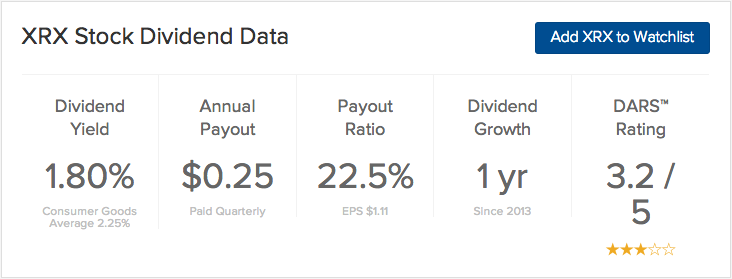
 Claude Paris/AP Until April 15 approaches every year, it's hard for many Americans to pay much attention to tax issues. But the recent surge in the number of U.S. companies using a popular tax-cutting strategy known as a tax inversion has led to extensive controversy, with proponents of the strategy arguing that it's entirely legal while opponents worry about the loss of U.S. corporate tax revenue. Moreover, political fallout from having well-known companies like Burger King Worldwide (BKW), AbbVie (ABBV) and Medtronic (MDT) flee for foreign countries almost guaranteed that the U.S. government would take action. Earlier this week, the Treasury Department finally fought back, with new rules designed to limit some of the most common ways that companies structure tax inversions, but they fail to address the deeper issue that led to the use of tax inversions and similar tax-saving devices in the first place. What Tax Inversions Are and Why They're a Big Deal The reason that tax inversions have generated so much controversy is that they effectively take away U.S. tax revenue without having much meaningful impact on the way a company does business. A tax inversion involves a U.S. company buying out a foreign company, with the resulting combined business taking the tax home of the foreign company. Because most foreign tax systems have lower tax rates on businesses than the U.S. corporate tax rate of 35 percent, major corporations can save billions of dollars over the long run by moving abroad. Until now, moreover, it was relatively easy for companies to do tax inversions. Despite rules designed to limit their use, tax inversions involved huge U.S. companies merging with much smaller foreign companies. For instance, AbbVie is almost twice as big as its target, Shire, even after Shire shares soared following the buyout announcement. Medtronic has a similar size advantage compared to target Covidien (COV). What the Treasury Did In its notice to the public, the Treasury took a hard stance on trying to eliminate tax inversions. Treasury Secretary Jacob Lew characterized the new rules as "meaningfully reducing the economic benefits of inversions after the fact, and when possible, stopping them altogether." The rules themselves are complicated, but they seek to make tax inversions harder to structure. One rule change essentially doubles the required size of the foreign target company, with potential adverse consequences if shareholders of the U.S. company own as little as 60 percent of the combined company's stock. Another prevents a U.S. company from using tactics like paying special dividends to reduce its relative size or moving assets into a foreign subsidiary that it then spins off to its shareholders. Other rules go beyond the tax inversion strategy, limiting the ability of companies to access cash from their foreign subsidiaries through loans. Why the Treasury's Moves Aren't Enough Yet critics were quick to note that the new rules don't go far enough. CNBC commentator Josh Brown pointed out that the rules do nothing to stop U.S. companies from accumulating assets in overseas subsidiaries and keeping them outside the U.S. indefinitely. Under current tax law, such moves never require the U.S. parent company to pay taxes on the foreign income. Even the Treasury admits that these measures won't solve the true problem involved in enforcing U.S. tax rules in a global economy. As Lew said, "comprehensive business tax reform that includes specific anti-inversion provisions is the best way to address the recent surge of inversions," but the Treasury felt that taking what action it could now would be better than doing nothing. More broadly, the global economy makes it easier than ever for companies to shop for countries that offer the best tax incentives. Just as U.S. companies routinely get large tax breaks from state and local governments that want to lure new business prospects to their areas, so too have entire nations sought the business of the largest multinational corporations, touting their much-lower corporate tax rates and the availability of legal tax laws to help them minimize their worldwide tax liability. The Treasury's efforts to control tax inversions are an important first step. But without full-blown tax reform to align the U.S. foreign tax system with the rest of the world, the Treasury's move won't solve the larger problem and will instead give companies an incentive to find other innovative methods to cut their tax bills.

 (Photo by: Heidi Gutman/CNBC)
  Getty Images As a 19-year-old, Robert Knoll made a mistake that many young people do -- he got into debt. Knoll did it by living beyond his meager salary as a U.S. Marine, and using small payday loans to help him get by between paychecks. "The problem, though, is it puts you behind the next payday," Knoll says. Those $80 to $200 payday loans added up, along with the $50 in interest he'd pay to borrow $200 for five days. With an annual percentage rate on the loan of more than 200 percent, Knoll would post-date a check for $250 for a $200 loan that would be paid off five days later when his paycheck was deposited into his checking account. "You can spend your entire paycheck before you get it," says Knoll, now an account executive at DRIVEN Public Relations in Temecula, California. He retired as a Marine master sergeant in 2013. Help From the ARK Unlike servicemembers today, Knoll didn't have help from the military on payday loans back then. One program that officials are trying to remind military members and their families about is the Asset Recovery Kit. For a $5 fee, members of 17 credit unions supported by the Pentagon Federal Credit Union Foundation can borrow up to $500 interest-free for 30 days. The program has loaned more than $3.8 million in 8,724 loans since it started in 2004, says Jane Whitfield, president and CEO of the PenFed Foundation. "We want to help in preventing short-term emergencies becoming long-term problems," she says.
 Getty Images For a lot of people, the end of the year is a time of celebration. Not just because of the holidays and family - but also for the big end-of-the-year bonus that gets paid out for all the work you've done over the last 12 months. More than half of all employers give out a year-end bonus that might be monetary in nature or come in the form of other benefits like gifts cards or employee gift registries. Monetary bonuses can differ in appearance too from direct paycheck compensation to 401(k) contributions. Some people refer to this type of bonus as a Christmas bonus. While bonuses have experienced a downward trend over the last few years due to the recession, the average bonus was about 1.3 months of salary in 2013, according to JobsDB.com. Wall Street Takes the Cake for Year-End Bonuses It's no secret that the biggest year-end bonuses go to those who work on Wall Street. These bonuses can run from a few thousand for a secretary to millions for higher-level management. In 2013, the average Wall Street bonus rose 15 percent to $164,530, according to The New York Times. That's still tame compared to the biggest bonuses paid out to Wall Street executives. The top three bonuses of 2013 - paid to Michael Farrell, Ian Cumming and Leslie Moonves - alone added up to around $84 million, according to Forbes. Farrell's bonus was earned on only a partial year of work. $29 million -– Michael Farrell, former CEO of Annaly Capital Management $27.5 million -– Ian Cumming, CEO of Leucadia National Corp. $27.5 million -– Leslie Moonves, CEO of CBS (CBS) While we can safely assume these people have a huge tax bill at the end of the year, you might be surprised to know that - whether you received one hundred thousand dollars or just a few hundred bucks - the tax rate on bonuses remains the same for most. How Your Bonus Gets Taxed The first thing you'll probably notice when receiving a bonus check is how much gets taken out in taxes. It's not complicated, and it is taxed under a different set of rules than your standard income is. Bonuses, commissions and prizes are all considered supplemental wages and are subject to a supplemental wage tax. If you have more than one million in supplemental wages for the year, your employer must withhold tax at the highest federal rate of 39.6 percent. If it's less than that amount, then it depends on how the wages are paid. If your bonus is not designated as a supplemental wage, taxes are withheld based on your W-4 form. However, if this income is noted separately, your employer must withhold 25 percent or combine your regular and supplemental earnings in one pay period and apply the regularly withholding rates. Note how this tax could differ from a graduated income tax, which is adjusted based on income bracket. Putting That Bonus to Work The most exciting part of getting a bonus is deciding how to spend it. Many financial planners like to use the 50-30-20 rule: 50 percent of your budget toward necessities (food, water, shelter, transportation etc.) and paying down debt, 30 for discretionary use, and 20 percent toward savings. Instant paydays are easy to celebrate and can provide an excuse for lavish spending, at least once a year; however, a more appropriate use of that bonus is to get yourself more organized financially. If you have debt, that bonus can wipe it out or at least reduce it substantially. You'll save money on interest payments over the long term and improve your credit score, as well, which will lead to even more savings moving forward. A good financial plan includes at least three to six months worth of emergency savings built up. If you haven't done that, you might consider funding an emergency account. You never know when the unexpected will happen and knowing that you're prepared take a lot of worry and stress out of unforeseen circumstances. The holiday season is also a period of budget busting, as the average shopper will spend $804.42 this year celebrating Christmas, Hanukkah or Kwanzaa, according to the National Retail Federation. Much of this spending will end up on credit cards, which could take shoppers several months to pay off, potentially at the detriment of their credit scores. Of course, working all year long and having nothing to show for it isn't a great reward system. If your finances are squared away, go ahead and splurge a little, as this could also be a good opportunity to indulge and fight off frugal fatigue. Take the family on vacation or buy something you know you'll enjoy. If you've made sure to put some of that bonus toward debt and savings to make financial progress, if needed, then you can spend the rest guilt free.
  NEW YORK (CNNMoney) Want to get paid more? The White House claims President Obama's immigration plan will raise wages for immigrants and American-born alike.
  Steven Senne/AP NEW YORK -- Walmart's first-quarter net income fell 5 percent as the world's largest retailer was hurt by bad winter weather and continues to see its low-income customers struggle in the U.S. and around the globe. The company's performance missed Wall Street's expectations, and it gave a weak second-quarter earnings forecast. Walmart's (WMT) stock fell nearly 3 percent in premarket trading Thursday. The results underscore the big challenges facing Walmart's new CEO, Doug McMillon, who took over the top role on Feb. 1. The retailer is considered an economic bellwether, with the company accounting for nearly 10 percent of nonautomotive retail spending in the U.S. Walmart's latest performance appears to show that many people are having a hard time stretching their money between paychecks. For the period ended April 30, the Bentonville, Arkansas, company earned $3.59 billion, or $1.11 a share. That compares with $3.78 billion, or $1.14 a share, a year ago. Walmart Stores said that bad weather hurt earnings by about 3 cents a share. Its performance was also dinged by a higher-than-expected tax rate. Income from continuing operations was $1.10 a share. Analysts, on average, expected earnings of $1.15 a share, according to a FactSet survey. "Like other retailers in the United States, the unseasonably cold and disruptive weather negatively impacted U.S. sales and drove operating expenses higher than expected," President and CEO Doug McMillon said in a statement. But Walmart has been suffering from weak sales in the U.S. for some time. Sales at U.S. stores open at least a year slipped 0.2 percent in the quarter, the fifth consecutive quarter of decline the metric, considered a key gauge of a retailer's financial performance. Analysts had been expecting the measure to be flat. In the U.S., while jobs are easier to get and the housing market is gaining momentum, these improvements haven't been enough to get Americans to spend. On top of that, the Nov. 1 expiration of a temporary boost in food stamps is hurting its shoppers' ability to spend. Total revenue rose 1 percent to $114.96 billion. Wall Street was calling for higher revenue of $116.43 billion. Revenues Rise McMillon said in a prerecorded call that U.S. sales rose during the second half of the quarter, but that Sam's Club had lower-than-expected sales. While membership income climbed, McMillon said it was mostly because of a fee increase started last year. Total U.S. revenue rose 2 percent to $67.85 billion. Walmart International's sales rose 3.4 percent in the quarter, on a constant currency basis. Walmart, which has 10,994 stores in 27 countries, is facing stiff completion from dollar chains and online king Amazon.com (AMZN). Walmart has been sharpening its focus on everyday low prices at U.S. stores and further pushing that strategy abroad. Walmart also said earlier in the year that it will speed up growth plans for its smaller Neighborhood Markets and Walmart Express stores that cater to shoppers looking for more convenience with fresh produce and meat and household and beauty products. In a call with the media, Walmart executives said super centers are getting bigger purchases on each trip from people stocking up on bulk items, but traffic has been weaker, particularly in the bottom performing 10 percent of its stores. At Neighborhood Markets, on the other hand, traffic is up 4 percent as people buy fill-in items at the smaller stores. For the second quarter, Walmart anticipates earnings from continuing operations in a range of $1.15 to $1.25 a share. Analysts predict earnings of $1.28 a share. The company's shares fell $2.41, or 3.1 percent, to $76.33 in premarket trading just before the market opened.

 ) reported its third quarter results, higher revenue and slightly lower unadjusted earnings compared to last year’s Q3.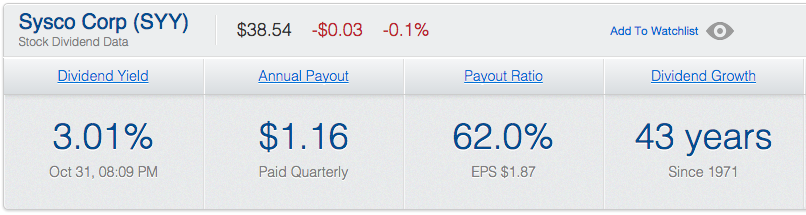

 Subscribe via Email
  Subscribe RSS Comments Please leave your comment:
 MORE GURUFOCUS LINKS